
Innovation rarely happens in isolation anymore. Today’s breakthrough technologies aren’t just built on a single discipline — they’re forged at the intersection of multiple fields.
Think about autonomous vehicles, next-generation medical devices, or quantum computing. Each of these relies on a combination of:
- Semiconductors to provide power efficiency, RF capability, or advanced materials like GaN and SiC.
- Embedded systems to control, process, and integrate hardware with software.
- Photonics to enable sensing, high-speed data transfer, and imaging.
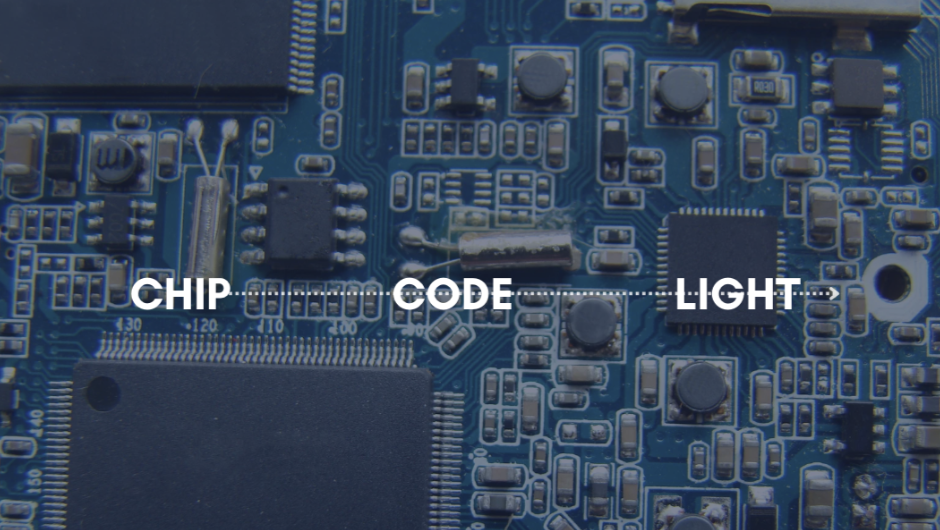
From chips to code to light, these technologies are converging — and so are the skills required to bring them to life.
The Recruitment Challenge
While convergence is exciting, it also creates a hiring headache. Traditional recruitment models often treat these markets in silos. A semiconductor engineer, an embedded developer, and a photonics researcher are seen as completely separate talent pools.
But the reality is different. Many of today’s most valuable engineers are those who can span disciplines — for example, an embedded firmware engineer who understands optical sensors, or a power electronics specialist with exposure to system-level coding.
These profiles are rare, and the competition to hire them is intense. Big Tech companies are casting a wide net, while SMEs and scale-ups often struggle to keep pace.
The Market Shift
Forward-thinking hiring managers are already adapting by:
-
Prioritising transferable skills over “perfect match” experience.
-
Building cross-disciplinary teams where photonics, semiconductors, and embedded engineers collaborate earlier in the design cycle.
-
Attracting talent from academia into industry, especially in photonics and compound semiconductors.
The companies that succeed in hiring for convergence aren’t just filling roles — they’re building resilient, future-ready teams.
Our Perspective
At Octagon Group, we’ve seen first-hand how the recruitment market is shifting across semiconductors, embedded systems, and photonics. We know that a candidate’s value often lies beyond a neat job title, and that the strongest hires are those who thrive in the overlap between disciplines.
The next wave of innovation won’t come from chips, code, or light in isolation. It will come from the engineers who can bring all three together.